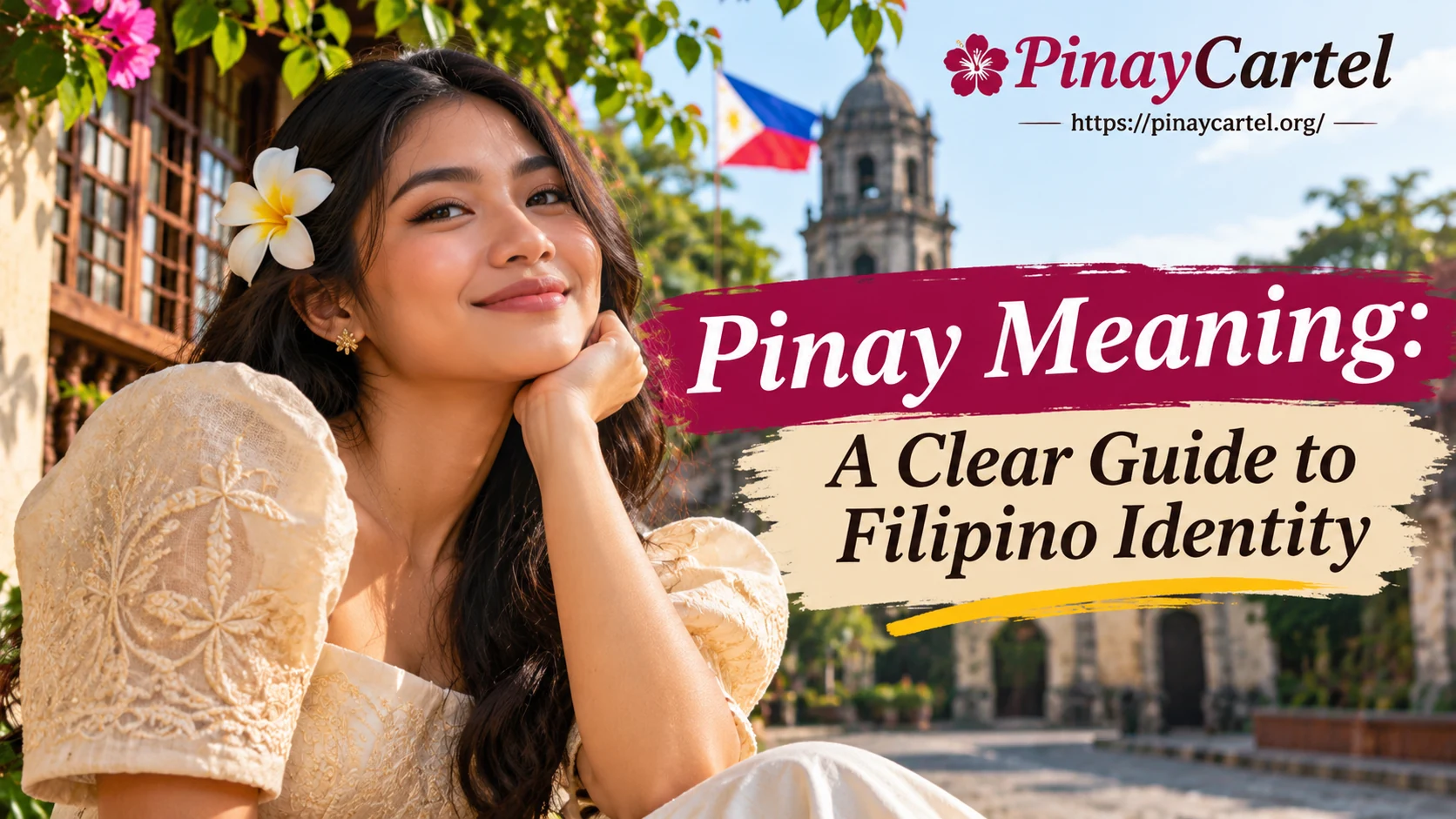

The Pinay meaning is straightforward: it refers to a Filipino woman or a woman of Filipino descent. However, its cultural significance goes beyond a dictionary definition. The term connects language, heritage, family background, and the experiences of Filipino women in the Philippines and abroad. This guide explains its meaning, origins, common usage, and place in modern Filipino culture.
Quick Answer: What Does Pinay Mean?
Pinay is an informal Filipino term for a woman from the Philippines or a woman of Filipino descent. It is the feminine counterpart of Pinoy, a commonly used informal term for a Filipino person. The word is used in everyday conversations, cultural discussions, and Filipino communities around the globe.
What Is Pinay Meaning?
Pinay means a Filipino woman or a woman with Filipino ancestry, and it is commonly used as an informal expression of cultural identity.
The term is familiar in the Philippines and among Filipino communities living overseas. It can describe a woman born in the Philippines, someone raised in a Filipino household abroad, or a woman who identifies with her Filipino heritage.
Unlike a formal nationality description, Pinay is a casual cultural expression. It often appears in conversations between friends, community discussions, entertainment, online publications, and social media.
For example, a Filipino woman living in Australia might introduce herself as a Pinay when discussing her family background. Another woman born and raised in Manila might use the same term when talking about her cultural identity.
Both examples are appropriate because the word is connected to Filipino heritage rather than a particular birthplace or lifestyle.
Is Pinay Different From Filipina?
Pinay and Filipina generally refer to the same group of people, but their usage differs.
Filipina is the feminine form of Filipino and is widely used in formal English. Pinay is more informal and is commonly found in casual conversations and cultural expressions.
For example:
-
A university publication might use the term Filipina students.
-
A social media post might say proud to be Pinay.
-
An international article might refer to Filipino women when discussing a broader group.
The appropriate term depends on the writing style, audience, and personal preference.
The Origin and History of the Word Pinay
Pinay developed through Filipino and Tagalog language usage and became a familiar expression for women of Philippine heritage.
The term is associated with Pinoy and Filipina. Dictionary references identify Pinay as an informal word derived from Tagalog usage, although descriptions of its precise historical development differ.
Dictionary.com records Pinay from the late twentieth century and describes it as the feminine counterpart associated with Pinoy. Collins also identifies it as an informal term for a female native or inhabitant of the Philippines.
There is also an important diaspora history. Filipino American cultural scholarship discusses Pinay as a term of self-identification used by women of Philippine descent in the United States.
This history shows that the word has connections to both language and community identity.
How Pinay Became a Familiar Cultural Expression
The growing use of Pinay reflects the way Filipino communities communicate their heritage.
Several factors contributed to its wider recognition:
-
Everyday language: Informal Filipino expressions became common in conversations and popular culture.
-
Migration: Filipino communities abroad used familiar identity terms to maintain cultural connections.
-
Community publications: Cultural writing and Filipino American publications helped make the term more visible.
-
Media representation: Entertainment, music, and online conversations introduced the expression to wider audiences.
The term does not have one universally agreed historical turning point. Its use developed through different Filipino communities over time.
Why Pinay Is Important to Filipino Identity
Pinay is important because it provides a familiar way for Filipino women to express their cultural background and connection to their heritage.
Its meaning can differ depending on personal experiences, family traditions, and the country in which someone was raised.
1. Connection to Filipino Heritage
For many women, being Pinay means having a connection to Filipino history, family traditions, languages, and cultural practices.
A woman raised outside the Philippines may maintain this connection through conversations with relatives, traditional food, family celebrations, and visits to her family’s hometown.
2. Representation of Filipino Women
The term also appears in discussions about Filipino women’s participation in education, business, science, entertainment, public service, and technology.
It allows cultural conversations to include different experiences rather than presenting Filipino women through a single narrow image.
3. Identity Across Generations
A first-generation Filipina living overseas may have grown up speaking a Philippine language at home. Her children may speak primarily English or another local language.
Both generations can have a connection to Filipino heritage, although their experiences may differ.
4. Recognition in International Communities
Filipino communities exist across North America, Europe, the Middle East, Asia, and other regions.
Pinay is one expression that can help women communicate their cultural background and connect with other people who share similar family histories.
Pinay, Pinoy, Filipina, and Filipino: Key Differences
These four terms are closely related, but they are not interchangeable in every situation.
| Table 1: Quick Facts at a Glance | Meaning |
|---|---|
| Pinay | Informal term for a Filipino woman |
| Pinoy | Informal term for a Filipino person, often masculine in usage |
| Filipina | Formal feminine term for a Filipino woman |
| Filipino | General term for people or things connected to the Philippines |
| Philippines | The country in Southeast Asia |
| Filipino language | The national language of the Philippines |
Comparing the Main Filipino Identity Terms
| Table 2: Term Comparison | Typical Usage | Example |
|---|---|---|
| Pinay | Informal, feminine | She identifies as Pinay |
| Pinoy | Informal, commonly masculine or collective | He is a proud Pinoy |
| Filipina | Formal, feminine | A Filipina business owner |
| Filipino | General or masculine, depending on context | Filipino culture and history |
One important distinction concerns the word Filipino. It can refer to a person, nationality, culture, or the national language, depending on the sentence.
The 1987 Philippine Constitution identifies Filipino as the national language and Filipino and English as official languages. Regional languages also have an important place in Philippine communication and education.
Different Aspects of Modern Pinay Identity
Modern Pinay identity includes cultural traditions, professional interests, personal experiences, and participation in international communities.
It cannot be reduced to clothing, food, appearance, or a fixed set of social expectations.
Filipino Language and Regional Traditions
The Philippines has a diverse linguistic and cultural background.
Filipino and English are official languages, while communities also use languages such as Cebuano, Ilocano, Hiligaynon, Waray, and Kapampangan.
A woman from Cebu may have different traditions and linguistic experiences from someone raised in Manila or Davao.
These regional differences are an important part of Filipino identity.
Family and Community Connections
Family relationships and community participation are important in many Filipino households.
Examples include:
-
Family reunions and shared meals.
-
Christmas celebrations and local fiestas.
-
Traditional recipes passed between generations.
-
Respectful relationships with older relatives.
-
Community gatherings and cultural events.
These practices vary between households, regions, and generations.
Education and Professional Development
Filipino women participate in many professional fields, including healthcare, education, technology, entrepreneurship, research, and public administration.
Their professional identities can exist alongside their cultural backgrounds. Being Pinay does not determine someone’s career, education, ambitions, or personal choices.
Technology and Digital Representation
Online platforms give Filipino women opportunities to share cultural knowledge, discuss professional experiences, and participate in international conversations.
Blogs, social media, online publications, and digital businesses have made Filipino cultural discussions more accessible to readers outside the Philippines.
For an editorial platform like PinayCartel, these topics create useful connections between Filipino heritage and contemporary interests.
Travel and Cultural Experiences
Travel can also provide opportunities to explore Filipino heritage.
Visiting different Philippine regions introduces travelers to local food, historical locations, festivals, architecture, and community traditions.
For Filipinos living abroad, visiting relatives or exploring their family’s home region can provide a personal connection to their background.
How to Explore Filipino Heritage Step by Step
Learning about Filipino heritage does not require someone to live in the Philippines or speak every regional language. A few practical activities can help build cultural knowledge and stronger family connections.
Step 1: Learn About Philippine History
Start with the country’s history, major historical events, and regional communities. Learning about the Spanish colonial period, independence, and the development of modern Filipino society provides useful historical context.
Step 2: Explore Filipino Languages
Learn basic Filipino expressions and discover languages spoken in different regions. Even learning a few greetings can make conversations with relatives and community members more meaningful.
Step 3: Discover Traditional Filipino Food
Explore popular dishes such as adobo, sinigang, pancit, and kare-kare. Regional recipes also provide insight into local ingredients, cooking practices, and family traditions.
Step 4: Participate in Cultural Celebrations
Attend local Filipino festivals, community gatherings, and heritage events. These activities offer opportunities to experience music, dance, food, and traditional celebrations.
Step 5: Listen to Different Filipino Experiences
Read personal stories, interviews, and publications by Filipino women from different generations and regions. Their experiences can provide perspectives that general cultural descriptions often miss.
Step 6: Stay Connected With Filipino Communities
Join appropriate cultural events, maintain family relationships, and follow reliable Filipino cultural publications. Online resources can also help people living abroad stay informed about their heritage.
Common Mistakes When Using the Term Pinay
The word is simple, but incorrect assumptions can lead to misunderstandings. Three common mistakes deserve attention.
1. Treating Pinay and Filipina as Completely Different Identities
Both terms generally describe Filipino women.
Fix: Use Filipina in formal writing and Pinay in informal conversations, while respecting individual preferences.
Filipino women have different languages, family histories, regional traditions, and personal experiences.
Fix: Avoid generalizations. Consider the individual’s own background instead of assuming that every Filipino woman follows identical traditions.
3. Connecting Pinay Identity With Physical Appearance
There is no single appearance that defines a Filipino woman.
Fix: Treat Pinay as a cultural and identity-related expression rather than a physical description.
A Practical Filipino Heritage Checklist
The following checklist provides a simple weekly plan for anyone interested in learning more about Filipino culture.
| Table 3: Weekly Activity | Suggested Action | Frequency |
|---|---|---|
| Language | Learn five Filipino words | Weekly |
| History | Read about one historical event | Weekly |
| Food | Explore one traditional recipe | Weekly |
| Culture | Learn about one regional tradition | Weekly |
| Community | Attend or explore a cultural event | Monthly |
| Family | Speak with relatives about family history | Weekly |
The activities are suggestions rather than requirements. People can choose those that suit their interests, available time, and family background.
Pinay Identity in Contemporary Filipino Culture
Pinay identity continues to appear in discussions about women’s representation, education, employment, entertainment, and cultural participation.
Women’s Representation and Empowerment
Filipino women contribute to professional and community activities across many sectors. Their experiences also include discussions about equal opportunities, education, leadership, workplace participation, and representation in public life.
A broader view of Pinay identity recognizes women as individuals with different goals and opinions rather than placing them into predefined cultural roles.
Filipino Entertainment and Popular Culture
Filipino films, television, music, literature, and online creators introduce audiences to different aspects of Filipino life.
Women working in these fields contribute to cultural storytelling and international representation. Their work also provides opportunities to discuss regional traditions, family relationships, contemporary social issues, and personal experiences.
Digital Communities and PinayCartel
Online publications have created additional opportunities for readers to explore Filipino culture.
PinayCartel can cover subjects such as Filipino heritage, women’s experiences, lifestyle, technology, business, travel, and entertainment through informative editorial content.
The focus should remain on accurate information, meaningful cultural context, and respect for the different experiences of Filipino communities.
Frequently Asked Questions About Pinay Meaning
1. What does Pinay mean in English?
Pinay means a Filipino woman or a woman of Philippine descent in English. It is an informal expression commonly used in Filipino communities. The word can describe women living in the Philippines as well as those who maintain Filipino cultural connections while living abroad.
2. Is Pinay the same as Filipina?
Yes, Pinay and Filipina generally refer to women from the Philippines or women of Filipino heritage. The main difference is their usage. Filipina is more common in formal English, while Pinay is generally used in informal conversations and cultural discussions.
3. What is the male version of Pinay?
Pinoy is the commonly recognized informal counterpart of Pinay. It is frequently used for Filipino men, although it can also refer to Filipino people collectively. Filipino is another widely used term and is suitable for general cultural, national, and professional references.
4. Can a woman born outside the Philippines be called Pinay?
Yes, a woman born outside the Philippines can identify as Pinay if she has Filipino ancestry or considers Filipino heritage part of her identity. Birthplace alone does not determine cultural identity. Personal background, family connections, and individual preferences also matter.
5. Is Pinay a respectful word?
Pinay is commonly used as a positive or neutral identity expression by many Filipino women. However, its meaning can depend on context, tone, and the speaker. It is best to respect individual preferences and avoid using the term in a mocking or stereotypical manner.
6. What is the origin of the word Pinay?
Pinay is associated with Tagalog and Filipino language usage. It developed as an informal feminine counterpart connected to Pinoy and Filipina. Its historical development is discussed differently across dictionary and cultural references, particularly regarding its use in Filipino diaspora communities.
7. What is the difference between Pinay and Pinoy culture?
There is no separate culture exclusive to Pinay and another exclusive to Pinoy. Both expressions relate to Filipino identity. Individual experiences can differ because of regional heritage, family background, gender, generation, and personal interests.
8. Does Pinay refer only to Tagalog-speaking women?
No, Pinay does not refer exclusively to Tagalog-speaking women. It can describe women from different Philippine regions and linguistic communities. Filipino women may speak Cebuano, Ilocano, Hiligaynon, Waray, Filipino, English, or other languages while identifying with Filipino heritage.
9. Is Pinay used by Filipinos living in the United States?
Yes, Pinay is used by some Filipino American women to express their cultural identity and family heritage. The term also has a history in Filipino American cultural discussions. However, individual preferences differ, and not every woman of Filipino descent uses it.
10. What does PinayCartel mean?
PinayCartel is the name of an online editorial website focused on Filipino culture, Pinay identity, women’s empowerment, lifestyle, technology, business, travel, and entertainment. Its brand name is separate from the dictionary definition of Pinay, which refers to a Filipino woman.
The Bottom Line
The Pinay meaning goes beyond a simple description of a woman from the Philippines. It is an informal expression connected to Filipino heritage, family background, cultural identity, and community relationships. Its use in the Philippines and overseas reflects the different ways Filipino women express their connection to their roots.
Recognizing the differences between Pinay, Pinoy, Filipina, and Filipino helps readers use these terms accurately. Filipino identity includes many regional languages, traditions, and personal experiences, and each deserves respectful representation.
For more articles about Filipino culture, women’s experiences, lifestyle, and contemporary topics, visit PinayCartel for more details.







[…] Pinay refers to a Filipino woman or a woman of Philippine descent. It is the informal feminine counterpart of Pinoy. […]
[…] Pinay is an informal term commonly used to describe a Filipina woman. It is particularly popular in Filipino communities and among people living outside the Philippines. […]